Direct Answer: Urgent root canal in Fort Wayne? Call 260-216-8066 for same-day treatment that saves your tooth and stops the pain fast.
Emergency Root Canal in Fort Wayne, IN
Save your natural tooth and eliminate infection with same-day root canal therapy at our Fort Wayne practice.
What Is a Root Canal and Why Might You Need One?
A root canal is a procedure that removes infected or damaged tissue from inside a tooth. Every tooth contains a soft core called the pulp, which holds nerves, blood vessels, and connective tissue. When bacteria reach this pulp through deep decay, a crack, or trauma, the tissue becomes inflamed and infected. That infection is what causes the intense, throbbing pain that brings most patients to our door.
The goal of root canal therapy is straightforward: remove the infected pulp, clean and disinfect the canal system inside the tooth, fill it with a biocompatible material, and seal the tooth. This stops the pain, eliminates the infection, and allows you to keep your natural tooth rather than having it extracted.
Signs You May Need an Emergency Root Canal
Not every toothache requires a root canal, but certain symptoms strongly suggest the pulp is involved. If you are experiencing any of the following, call us at 260-216-8066 for a same-day evaluation:
- Severe, persistent tooth pain that does not respond to over-the-counter pain relievers
- Intense sensitivity to hot or cold that lingers for more than a few seconds
- A darkened or discolored tooth
- Swelling or tenderness in the gum near a specific tooth
- A small bump (fistula) on the gum that may release pus or fluid
- Pain that wakes you up at night or worsens when you lie down
The Root Canal Procedure: Step by Step
Understanding what happens during a root canal can ease some of the anxiety around the procedure. Here is what you can expect at our Fort Wayne office:
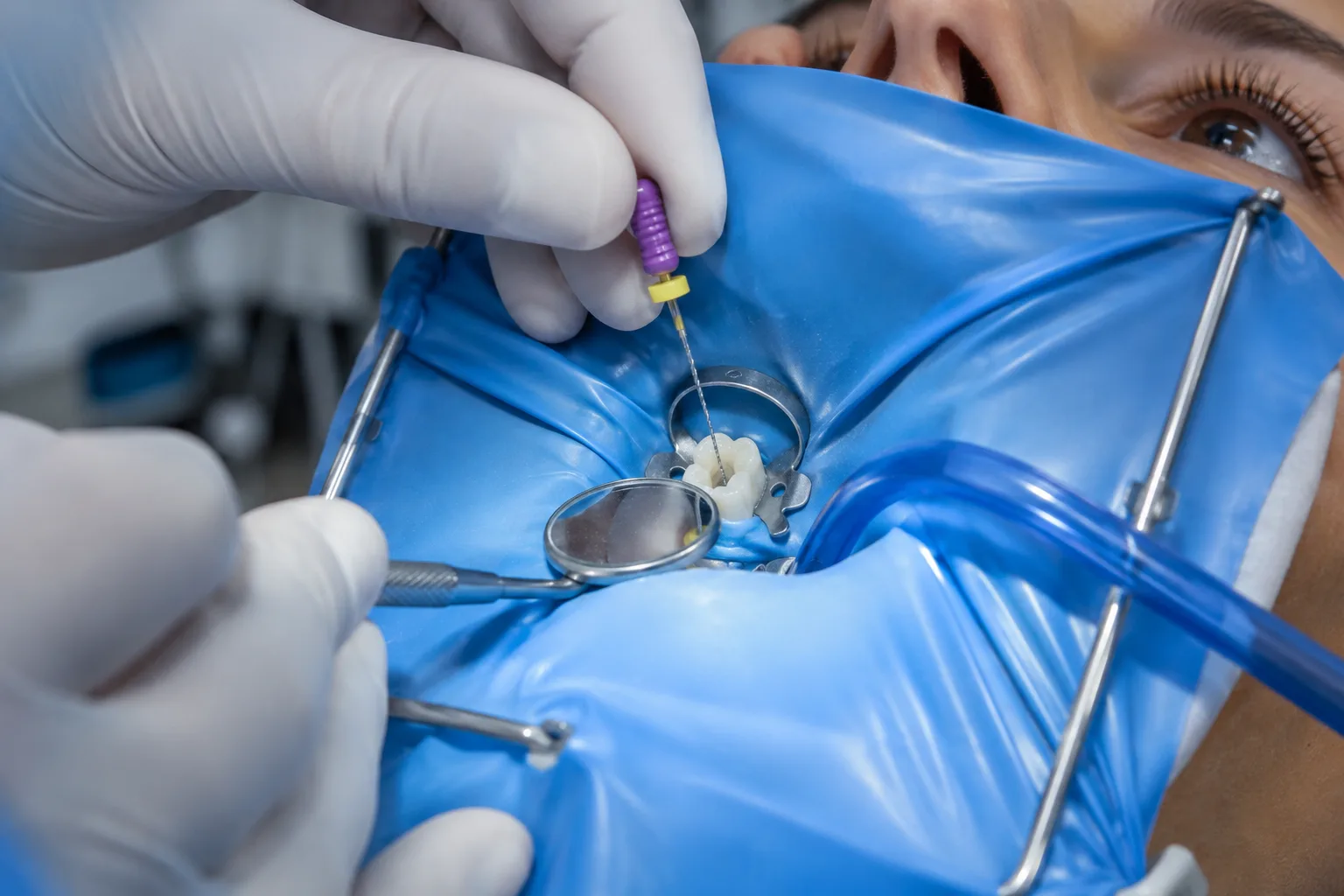
First, we take digital X-rays to see the shape of the root canals and determine the extent of the infection. Then we apply local anesthesia to numb the tooth and surrounding tissue. Once the area is completely numb, we place a small protective sheet (dental dam) around the tooth to keep it clean and dry during the procedure.
Next, we create a small opening in the crown of the tooth to access the pulp chamber. Using specialized instruments, we carefully remove the infected pulp tissue and clean each canal. We then shape the canals and flush them with an antimicrobial solution to eliminate remaining bacteria.
Once the canals are clean and dry, we fill them with gutta-percha, a rubber-like material that seals the space and prevents re-infection. Finally, we place a temporary filling to seal the opening. In most cases, you will need a crown placed within a few weeks to fully restore the tooth's strength and function.
After Your Root Canal
Recovery from a root canal is typically quick. The tooth and surrounding area may be sore for a few days, which is normal and manageable with over-the-counter pain medication. You can return to your regular activities the next day in most cases.
Avoid chewing on the treated tooth until the permanent crown is placed. Stick to softer foods for the first day or two, and continue your normal brushing and flossing routine. If you notice increasing pain, swelling, or a return of your original symptoms, contact us immediately.
Same-Day Root Canals
Stop the infection and save your tooth today. We perform emergency root canals seven days a week.
Call 260-216-8066Root Canal FAQ
Are root canals painful?
Modern root canals are far less painful than most people expect. We use effective local anesthesia to numb the tooth and surrounding area completely. Most patients say the procedure feels similar to getting a filling. The toothache you are already experiencing is usually far worse than the root canal itself.
How long does a root canal take?
Most root canals take 60 to 90 minutes from start to finish. Front teeth are faster because they have fewer root canals. Molars take a bit longer due to their multiple canals. We complete the procedure in a single visit whenever possible.
Can I drive home after a root canal?
Yes. Root canals are performed with local anesthesia, not sedation, so you are fully alert and able to drive afterward. The numbness in your mouth will fade within a few hours.
What happens if I do not get a root canal when I need one?
The infection will continue to spread. The pain will intensify, and the infection can damage the bone around the tooth root. In severe cases, a dental infection can spread to other parts of the body. A root canal stops the infection and saves the tooth before these complications develop.
Save Your Tooth Today
Call now for a same-day emergency root canal in Fort Wayne.
Call Now: 260-216-8066